GUANXI
2006
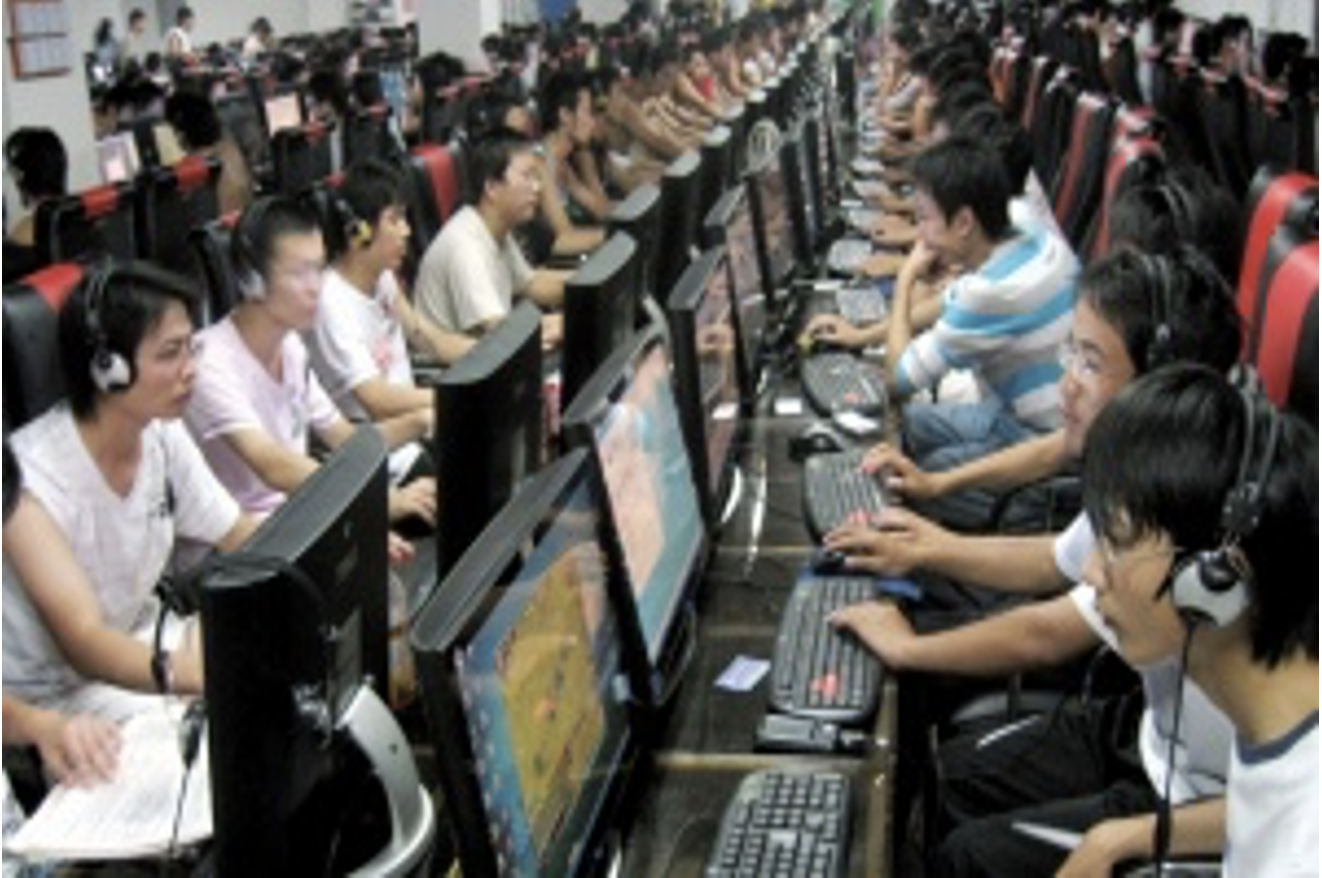
Millennials tend to see themselves as part of a larger identity – not a national or religious identity, not as a counter-culture, but a profound network of friends and connections. The Chinese have a word that describes this sense of inter-connection and ‘relationship’ – guanxi (GWAN-shee). My Chinese friends tell me that this is what keeps China together today – not Communism, not the People’s Liberation Army, not Mao, not culture or history, not even money – but ‘guanxi’. The character in Chinese language is composed of two ideograms –‘Community’ and ‘Relation’. The Chinese most often use the word to describe a network of friends who offer special consideration to each other in business. The idea of personal relationship (guanxi) goes beyond business, friendship or family relationship – it is a profound link to others that implies unconditional support and mutual beneficence. It is the opposite of the Chinese word for meaninglessness - (没关系Ch: mei-guanxi). In recent years the term ‘guanxi’ has been discouraged by the Chinese government which now sees it as a term that refers to corruption and the ‘insider’ trading of favors and influence – often the perception of foreign visitors and business people who see it as old-fashioned corruption.
Although it is now rarely discussed in China among polite company, ‘guanxi’ – relationship – is becoming the unifying principle of the planet. We are all connected in new, unexpected and, perhaps superficial, ways. Obviously, one must establish ‘guanxi’ in order to have meaning. Meaning and value are inevitably seen as functions of connection to others – to a larger consciousness. Indeed, many Chinese are obsessed with developing ever larger networks of guanxi – perhaps the only truly reliable foundation for economic and social success in contemporary China. For Westerners this often suggests an unassailable sense favoritism and sense of corruption and special influence. We tend to see it as the ‘good-old-boy-network’, writ large. That is perhaps partially correct, but ‘guanxi’ has much bigger implications than cultivating favorable business dealings for special friends. It comes remarkably close to describing the new collective consciousness of the Internet generation. Chinese Millennials, of course, understand the concept of guanxi, and have vastly expanded its power through their own use of social networking. European and American Millennials inherently ‘get’ the idea of connection as the most powerful concept in contemporary culture worldwide. Being connected – having guanxi – may be the greatest imperative of the new era.
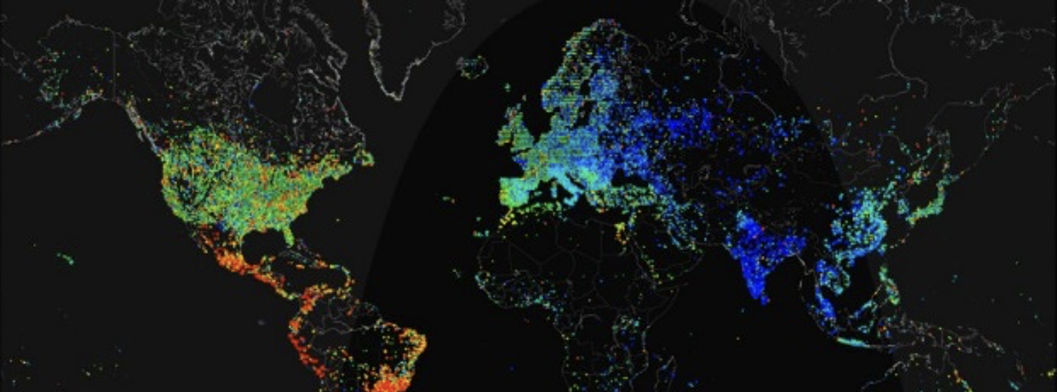
Digital maps of the internet
Today, the idea of spiritual inquiry is largely informed by collective identity rather than individual attainment. Collaboration is replacing individual heroism as the new cultural ideal. The ideas of dignity and wisdom are lost in an internet haze and an obsession with the collective wisdom and what’s cool – or ‘woke’. The classical European idea of man at the center of things (Anthropocentrism) is being quick eroded by a new kind of transpersonal Consciousness in which the new ‘center of things’ is no center at all – only flow. Chinese culture reflects the sense of relationship (guanxi) in many forms. The western idea of ‘spirituality’ is seen quite differently in East Asian culture. ‘Guanxi’ refers to personal relationships, but also to the idea of being inter-connected with everything. In Eurocentric culture, our sense of spirituality tells us that all things are connected only through the existence of God. For the Chinese, the idea of inter-connectedness isn’t a spiritual issue at all, it’s simply the way things are. Essential Chinese cultural concepts of Chi (氣;vital energy), Tao (道 ; the Way – or the flow of nature), Shen (神; life-force), De (德; virtue), are viewed as ordinary concepts – like gravity or light – not subject to debate or interpretation. Chinese culture has always been relational. It is, from a Western perspective, innately ‘spiritual ‘precisely because of its reliance on guanxi. The connection goes beyond personal relationship and implies a one-ness with all things. In classical Chinese art, images of the human being are often relegated into insignificance in comparison to nature.
The dragon is seen as a symbol of inter-connectedness – the serpentine flow of the universe and the impermanence of all things. In European culture, the individual is paramount. In East Asian culture, Tao (the Way) - the flow of things - is paramount. In many non-European cultures, humans are seen as a relatively insignificant element in an eternally changing universe. To an ego-driven Western mind, accepting one’s individual insignificance seems like a kind of death; a defeat – annihilation. For many Asians, the idea of personal insignificance is mediated by the cultural re-assurance that we’re all deeply inter-connected. That, they say, is the source of all harmony – and harmony is the basis for wellness. The myth of the romantic seeker of Truth – has faded and is replaced by a new kind of culture hero – smart, frivolous, collaborative, anonymous and sublime. The power-structure of the world today is no longer only about money or personal power. The Internet makes a new kind of power-structure inevitable. The ‘hive’ itself seems to have become the new ‘culture-hero’. It provides instant connection; it affirms identity; bestows instantaneous bliss and paradoxically transcends illusion by implying that illusion is the only truth. It causes cultural transformation on a truly global scale. A millennial medical student recently admitted to me that for his generation, the un-conditional acceptance of any idea is simply no longer in practice. ‘If someone tells me something, I never automatically believe it. I check the Internet and within seconds, I can know what 14 other people have to say about that idea and then make my own conclusions.’ The new spiritual practice of the Internet generation is guanxi!
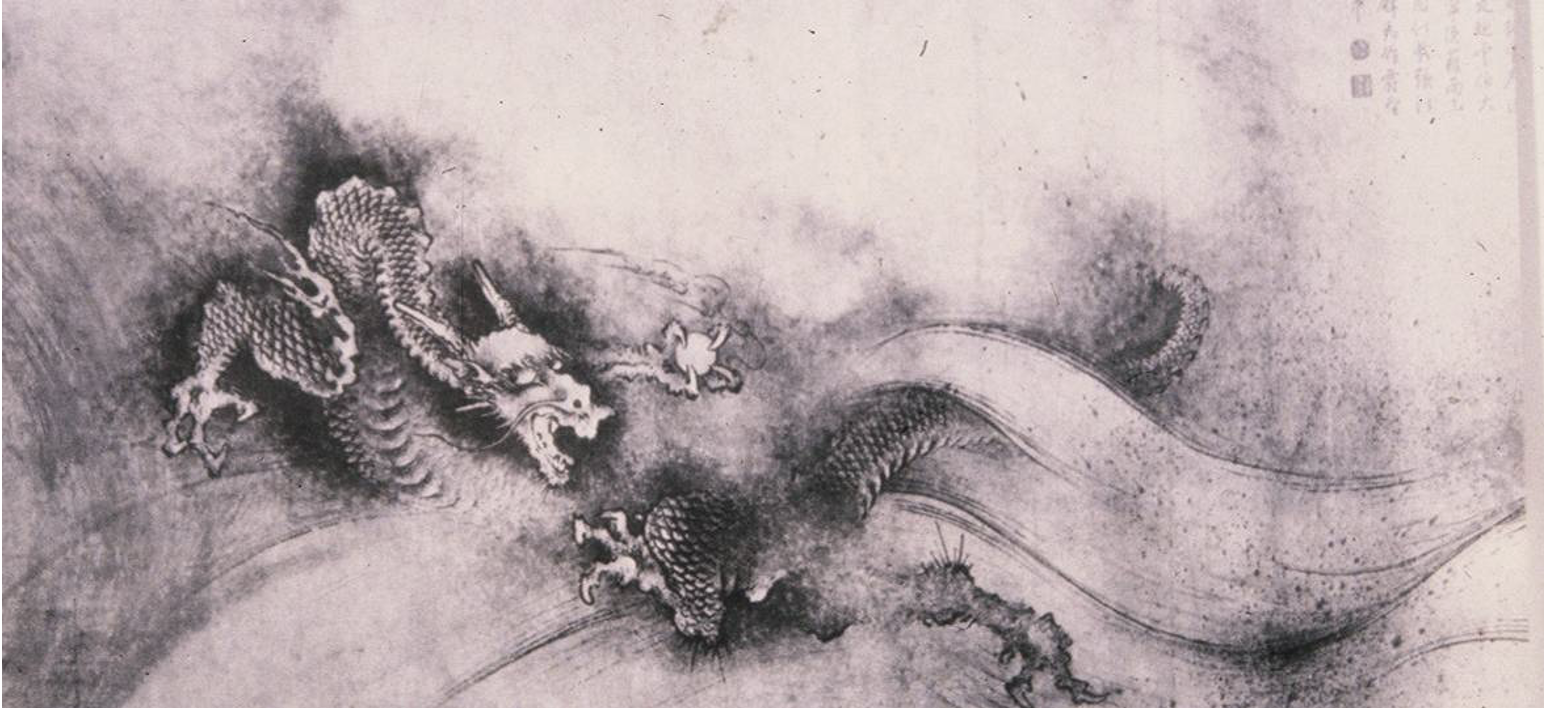
Nine Dragon Scroll, by Chen Rong, Sung Dynasty China
Today, we are all connecting in new ways. We do not need the gurus as we once did, and we tend no longer to believe that individual enlightenment is even desirable – or possible. The Indigo generation takes global connection and planetary transformation for granted, but even for the older generation who are still sometimes confused and disoriented by the new digital realities, we are irrevocably connected. The Millennials do not talk about any form of enlightenment as we once did. They are concerned with connection. We need only go to our iPhone to be in touch with everyone on the planet. We have access to the sum of the world’s knowledge in a few seconds. It’s no wonder that we’re still pondering the greater implications of the digital age. In the midst of sudden inter-connection, we look for comfort. We try to find new ways to express the ‘Self’ and to connect the individual self to other individual selves. We long for actual reality instead of the virtual kind. The act of art-making gives us the sense of touch that the internet denies us. The act of creating an image or an object becomes a physical activity. The digital revolution gives us new ways to understand relationship - guanxi.
When we look back at ‘spirituality’, we look at what once seemed to connect us to a larger world – the cosmos, God, Allah, The Atman, Buddha-nature. In that connection we sought bliss, meaning and true identity. We sought to go beyond illusion and into cosmic unity. In the post-messianic age, it is increasingly understood that illusion is reality – everything is a simulacrum. The role of the guru – the messiah – the genius – was once to lead us into a ‘higher’ state of awareness. All we need today is a good broad-band connection to understand that we are all connected and that enlightenment is not an individual experience – it is connection, and relationship. Guanxi is the guru and interconnection is the new Messiah.
Michael Grady 2006 © all rights reserved
